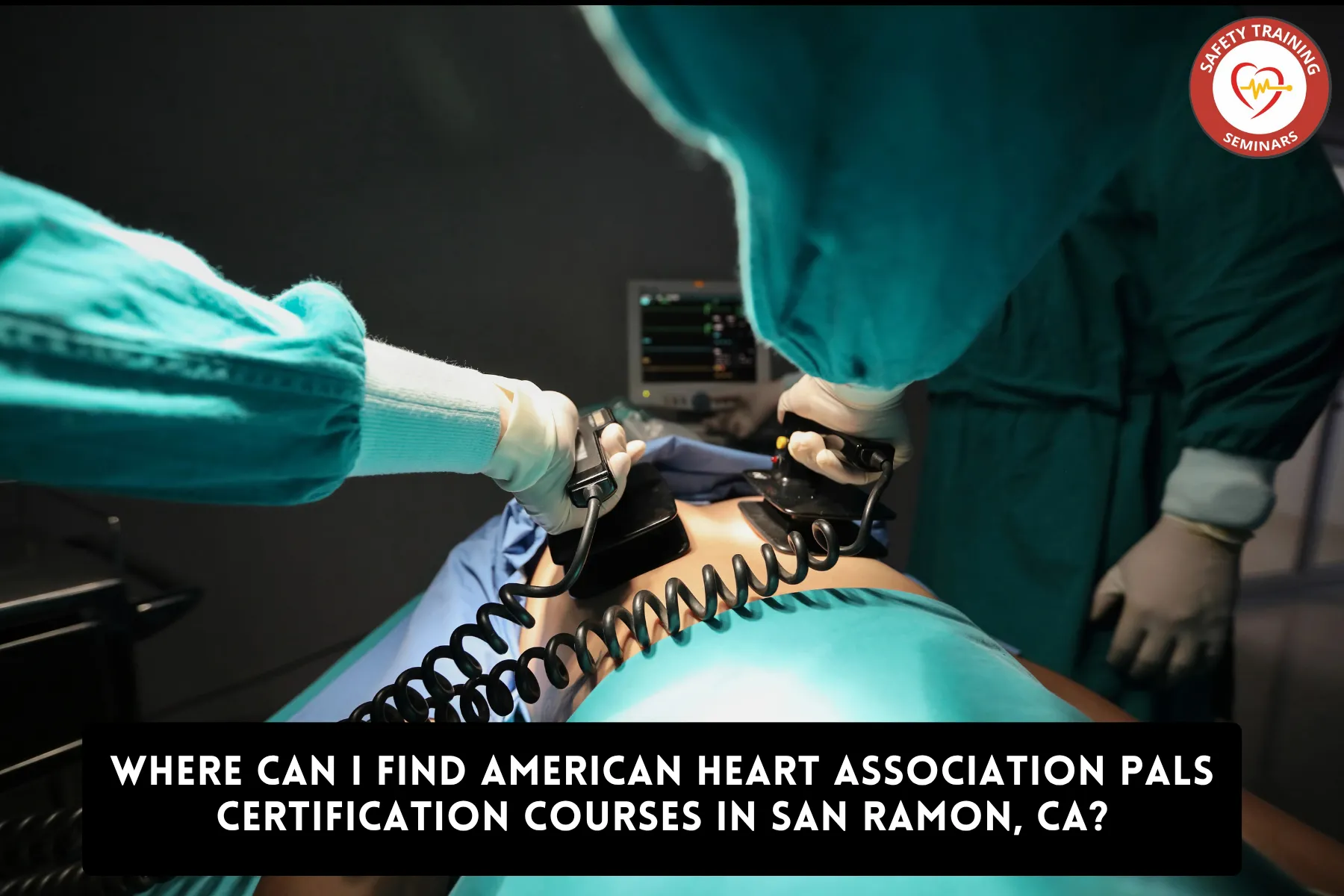
Healthcare professionals in San Ramon, California, can explore American Heart Association (AHA) Pediatric Advanced Life Support (PALS) training through Safety Training Seminars. The provider lists a local training center at Bishop Ranch 1, 6101 Bollinger Canyon Road, Suite 335A, San Ramon, CA 94583. PALS training offers nurses, physicians, paramedics, and other eligible clinicians structured preparation for responding to serious emergencies involving infants and children.
The best course depends on your current certification status, clinical responsibilities, and preferred learning format. Before registering, confirm that the course meets your employer’s requirements and includes the appropriate skills assessment and completion card. The PALS certification course in San Ramon is a useful starting point for reviewing the local training option.
Why PALS Training Matters for Healthcare Professionals
Pediatric emergencies can involve rapidly changing respiratory, cardiovascular, and neurological conditions. PALS training teaches healthcare providers to assess these situations systematically, recognize signs of deterioration, and coordinate appropriate interventions.
Unlike a general CPR course, Pediatric Advanced Life Support focuses on assessing and managing critically ill infants and children. The AHA curriculum includes pediatric resuscitation, recognition of shock, management of serious arrhythmias, and post-cardiac-arrest care.
For healthcare professionals working in and around San Ramon, this training may be relevant when preparing for a new clinical position, meeting hospital credentialing requirements, or renewing an existing qualification.
PALS education also emphasizes team communication. During simulated emergencies, participants practice organizing care, sharing information clearly, and responding to changes in a patient’s condition. These exercises help connect clinical knowledge with practical decision-making.
Understanding the PALS Curriculum Before You Enroll
PALS training combines clinical knowledge with practice-based learning. Participants work through scenarios that require them to identify warning signs, prioritize interventions, and reassess a pediatric patient’s response.
Key learning areas include:
- Respiratory assessment: Recognizing respiratory distress and respiratory failure and understanding appropriate early responses.
- Circulatory assessment: Identifying poor perfusion and distinguishing between different stages of shock.
- Heart rhythm management: Recognizing stable and unstable arrhythmias and understanding the clinical implications.
- Resuscitation and recovery: Applying pediatric resuscitation principles and learning about care after cardiac arrest.
- Collaborative response: Using clear communication, defined team roles, and coordinated decision-making during simulated emergencies.
The AHA’s current PALS program reflects its 2025 CPR and Emergency Cardiovascular Care guidelines. Review the course objectives before registering so you know which topics will be covered and how the practical assessment works.
Comparing Classroom and Blended PALS Training
San Ramon healthcare professionals can evaluate the available training formats according to their schedules and preferred learning methods. The AHA identifies classroom instruction, blended learning, and self-guided learning as distinct options, with specific completion requirements for each.
Classroom-based instruction
An instructor-led PALS course provides guided teaching, practical skills practice, and simulated clinical cases. Participants complete the cognitive and hands-on portions with an instructor.
This option may be suitable for learners who benefit from direct instruction, structured discussions, and feedback throughout the course.
Blended learning with HeartCode PALS
HeartCode PALS separates much of the knowledge-based learning from the hands-on component. Participants complete the online portion and then attend a practical skills session with an AHA instructor or use an approved compatible learning arrangement, depending on the course pathway.
This can help healthcare professionals fit independent study around work schedules while still completing the required practical training.
Self-guided learning
The AHA also describes self-guided learning through HeartCode Complete, which incorporates online education and skills practice and testing at a CPR Verification Station. Availability depends on the learning provider and its supported arrangements.
Before selecting a format, confirm that it is offered locally, meets your employer’s requirements, and leads to the appropriate PALS Provider Course Completion eCard. The AHA Define that its PALS course options result in a completion card valid for two years when all requirements are met.
Finding the San Ramon Training Location
Safety Training Seminars provides a local option for healthcare professionals who want to complete PALS training in the San Ramon area. Its website lists the training center at Bishop Ranch 1, 6101 Bollinger Canyon Road, Suite 335A, San Ramon, CA 94583.
When planning your visit, review your confirmation email for the session time, access instructions, and any required pre-course work. Do not assume that every course uses the same schedule or completion process.
San Ramon is part of the Tri-Valley area, making local training relevant to clinicians who live or work in nearby communities such as Danville, Dublin, and Walnut Creek. Professionals employed by local healthcare organizations, including San Ramon Regional Medical Center, should independently confirm which course type their department accepts.
The provider’s San Ramon website lists PALS among its healthcare training options. Review the current course listing for registration details, pricing, and available learning formats rather than relying on outdated third-party listings.
How to Prepare for a PALS Certification Class
A little preparation can help you focus on clinical reasoning instead of spending the entire session trying to recall basic concepts.
Before your course:
- Confirm your eligibility and course type. Determine whether you need the full provider course or an update course. If renewing, check the applicable requirements with your training provider.
- Complete the assigned pre-course assessment. Follow the instructor’s directions and finish any required online preparation before the scheduled skills session.
- Review pediatric basic life support. Refresh your knowledge of CPR, airway and breathing support, and patient assessment.
- Study the recommended materials. Use the current PALS Provider Manual or the resources specified in your course instructions.
- Plan enough time. Classroom and blended courses have different time commitments. Check the total expected duration, including breaks, testing, and practical activities.
- Keep your professional requirements in mind. If you need the card for a job, clinical placement, or renewal deadline, verify the required credential before registering.
Preparation requirements can vary by course Structure . The AHA recommends checking with the training center or instructor to determine which materials are needed.
Frequently Asked Questions About PALS Certification in San Ramon
Where can I register for PALS training in San Ramon?
Safety Training Seminars lists PALS training on its San Ramon website. Review the local course page for current registration information and verify the selected course format before booking.
How long does an AHA PALS course take?
Duration depends on the course format and whether you are taking a full provider course or an update course. The AHA lists classroom course estimates ranging from approximately 8 hours for an course to 17.5 hours for a traditional full course, including breaks. Blended learning also requires time for online study and a separate practical session.
Is online PALS training enough to receive a completion card?
Not necessarily. For HeartCode PALS blended learning, completing the online portion is only one part of the process. You must also complete the required hands-on skills session to receive the relevant completion card.
How long is a PALS completion card valid?
An AHA PALS Provider Course Completion eCard is valid for two years. Check the issue date and your employer’s renewal policy to determine when you need to complete your next course.
Can healthcare students take PALS training?
Healthcare students may be eligible when their clinical program or professional pathway requires PALS. They should verify eligibility and course requirements with their school or clinical placement coordinator before registering.
What should I confirm before paying for a PALS course?
Check the course type, learning format, total fee, schedule, materials, practical assessment requirements, and completion-card eligibility. If your employer requires a specific AHA course, confirm that the selected option satisfies that requirement.
Take the Next Step Toward PALS Training
Choosing an appropriate PALS certification course involves more than finding a class with an open seat. Healthcare professionals should compare the training format, review the curriculum, and verify that the completion card meets their professional requirements.
Safety Training Seminars offers a local training option for people seeking an AHA PALS certification course in San Ramon, CA. Review the provider’s current course information, Verify the registration details, and choose the format that fits your learning needs and clinical obligations.