A Quick Look at the EMSA Preventive Health and Safety Course
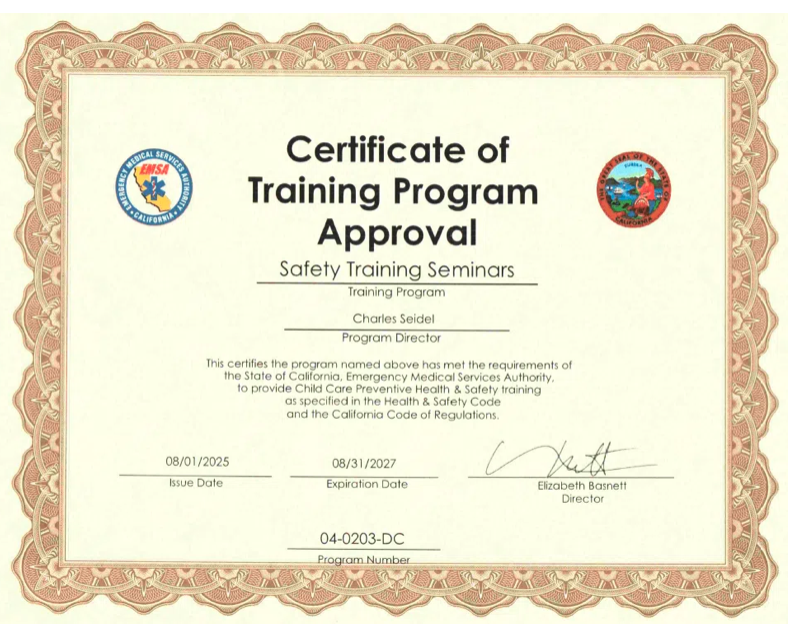
EMSA does not teach the classes itself. It approves training programs that teach Preventive Health Practices to California childcare providers using a set curriculum. Many courses draw on materials from the UCSF California Childcare Health Program, which are organized into three areas.
Keeping illness from spreading. This area covers handwashing, immunization records, exclusion of sick children, and routines for cleaning, sanitizing, and disinfecting.
Preventing injuries. This area covers safe room setup, playground checks, supervision, and safe storage of medications and chemicals.
Children’s nutrition. At least one hour of nutrition has been required since 2016.
Lead poisoning prevention has been a required part of every approved course since July 1, 2020. The content follows the California Department of Public Health’s childcare curriculum, so providers learn it within the preventive health class rather than in a separate session.
Licensing Basics for San Ramon Valley Providers
The California Department of Social Services (CDSS) licenses childcare programs through its Community Care Licensing Division. San Ramon has both types of licensed care:
- Family Child Care Homes: small or large programs run in the provider’s own residence, often in the city’s residential neighborhoods
- Child Care Centers: preschools, infant centers, and school-age programs in commercial, school, or faith-based buildings
Licensing applicants, along with many center directors and teachers, commonly need EMSA-approved Preventive Health Practices training and Pediatric CPR and First Aid. Your exact obligation depends on your role, facility type, licensing status, employer, and current regulations, so requirements differ from person to person. Before you register, check the current CDSS childcare licensing requirements or ask your program administrator. This page is general information, not regulatory or legal advice.
Hot Summers, Smoky Days, and Clean Classrooms
The San Ramon Valley sits inland, east of the bay. Summer afternoons are often much warmer than along the coast. That climate shapes everyday health practices in local childcare programs.
On hot days, providers plan shaded play, offer frequent water breaks, and watch young children for signs of heat stress. During wildfire seasons, smoke can settle over the Tri-Valley. Providers then need to decide when to bring children indoors and how to limit strenuous activity. The Bay Area Air District issues Spare the Air alerts that many programs follow.
Indoor sanitation matters just as much. The EMSA course reviews kitchen and food-prep hygiene, diaper-changing steps that reduce germ spread, toilet and potty-chair cleaning, and safe storage of cleaning products out of children’s reach.
Lead Poisoning Prevention Beyond Old Paint
Lead remains a concern for young children because it can affect brain development, learning, and behavior. Toddlers absorb lead more readily than adults and frequently put hands and objects in their mouths. Most children with elevated blood lead levels show no visible symptoms.
Much of San Ramon, including the Dougherty Valley area, was built in recent decades, well after the 1978 federal ban on lead-based residential paint. Newer homes reduce one source of risk, but they don’t eliminate lead exposure. The EMSA lead module also addresses less obvious sources:
- Certain imported toys, jewelry, and pottery
- Some traditional remedies, spices, and cosmetics
- Soil near older structures or busy roadways
- Older homes in established parts of the San Ramon Valley
Providers learn to recognize these sources, use wet cleaning to cut down on dust, and encourage families to discuss blood lead testing with their child’s doctor. Contra Costa Health offers childhood lead poisoning prevention resources for families and providers in the county.
Mealtimes, Allergies, and Growing Bodies
The nutrition portion of the course connects to situations San Ramon providers handle all the time.
Food allergies. A center may serve several children with peanut, tree nut, egg, or dairy allergies. Providers need clear allergy plans, careful label reading, and procedures that prevent cross-contact during snack time.
Specialized diets. San Ramon families come from many cultural and religious backgrounds. Providers may plan meals around vegetarian, halal, kosher, or medically directed diets.
Diabetes. A child with type 1 diabetes may need consistent meal timing and coordination with the family’s care plan.
Growth and feeding. Picky eating, slow weight gain, and the transition from bottles to cups are common topics that providers may need to discuss with parents.
Dental health. Serving water instead of juice and avoiding bottles at naptime help protect children’s teeth.
The course helps providers plan balanced, age-appropriate meals and recognize when a concern should go to a family or health professional. It doesn’t turn childcare staff into medical experts.
Who Signs Up for EMSA Childcare Training in San Ramon
The EMSA Preventive Health and Safety Course is relevant to:
- People preparing to open a licensed Family Child Care Home in San Ramon, Danville, or nearby communities
- Preschool teachers, infant-toddler caregivers, and center directors
- Early childhood education students at Diablo Valley College, which offers ECE instruction at its San Ramon Campus in Dougherty Valley and its main campus in Pleasant Hill
- Nannies, before- and after-school staff, and family caregivers who want structured health and safety knowledge
The Contra Costa Child Care Council, known as COCOKIDS, is the county’s childcare resource and referral agency. Its Concord office serves San Ramon, Danville, and Alamo, and providers often contact it for local support and information. Safety Training Seminars has no stated affiliation with COCOKIDS or Diablo Valley College.
Getting to Bishop Ranch From Across the Tri-Valley
The San Ramon Training Center at Bishop Ranch is a practical option for childcare professionals from San Ramon, Danville, Alamo, Blackhawk, Dublin, Pleasanton, and Walnut Creek. Interstate 680 runs through the San Ramon Valley, and Bollinger Canyon Road connects the business park to the city’s western and eastern neighborhoods.
Session formats can vary. Before you plan your trip, confirm whether your EMSA class meets in person at Bishop Ranch or online.
How Safety Training Seminars Supports San Ramon Childcare Providers
Safety Training Seminars has provided health and emergency training in California since 1989. It holds an EMSA training program license (#0204-DC) for childcare Pediatric First Aid, CPR, and Preventive Health and Safety courses.
The San Ramon center also offers CPR and First Aid classes, so a licensing applicant can complete both halves of the 16-hour training with one provider. Current pricing, dates, and class format are listed on the EMSA Preventive Health and Safety registration page.
Take the Next Step in Your San Ramon Childcare Career
San Ramon providers care for children through hot inland summers, wildfire smoke, food allergies, and the everyday work of keeping classrooms clean. The EMSA Childcare Health & Safety Certification builds practical knowledge in each of those areas and supports your path toward California childcare licensing. Review your requirements with CDSS, pick a session on the registration page, and complete your training at Bishop Ranch.